
About Iron Ore
Iron is a very important and strategic commodity and has an undeniable role in genesis, growth and development of modern advanced civilization. Indeed, maybe there is no other material which could be compared to Iron effectivity in mankind's life.
Iron Ores are rocks and minerals which economically contain metallic Iron. Iron Ore is the raw material used to make pig Iron, which is one of the main raw materials to make steel. Most of the mined Iron Ore is used in steel industry. Iron oxides are the major component of Iron Ores. They have various colours from dark grey, bright yellow, deep purple, to rusty red. There are mainly two economically viable Iron ore minerals: -
Magnetite (Fe3O4, 72.4% Fe)
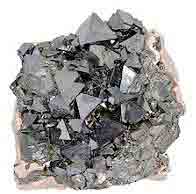
Magnetite is the form of iron ore where iron is found in the form of Fe3O4. Magnetite acts as a magnetized material under the influence of external magnetic field and therefore can be separated from the impurities even in the low intensity magnetic field. Magnetite can be Black or Grey in colour with powder being mostly black.
Magnetite is used in the production of Sponge or Pig iron which in turn is used in the production of Steel.
Hematite (Fe2O3, 69.9% Fe)
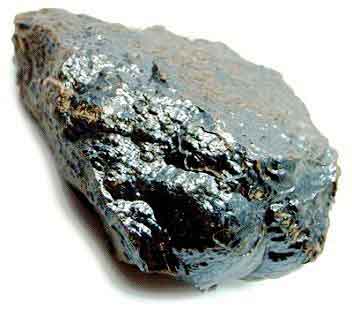
Hematite is the form of iron ore where iron is found in the form of Fe2O3. A large amount of Iron is extracted from Hematite. Hematite can also be separated from the mixture in the presence of external magnetic field but with a higher intensity. It is found mostly in rocks but some amount of Hematite is also found in sand. Hematite rocks are greyish in colour with its powdered form ranging from Red to Reddish brown in colour.
Economic Classification of Iron-Ore
⦁ High-grade Iron Ore generally has a cut-off grade of >60% Fe. Historically it has provided a direct feed to smelters either as a raw lump or fines, also in a processed form such as sinter or pellets.
⦁ Medium-grade Iron Ore is using to describe Iron Ores which has a cut-off grade between 40-60 percent of Fe.
⦁ Low-grade Iron Ore is a term applied to iron-rich rocks with cut-off grade in the range of 25-30% Fe. It was the main supply of iron ore for many centuries of the World's early history of production of iron. Since the 1950s North America's main supply has been low-grade ore.
Forms of Iron-Ore available
Fines
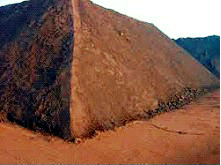
Iron-Ore Fines have the size of less than 6 mm with Fe content in the range of 56% to 66%. It is processed through Sintering before it is fed into the Blast Furnace for steel-making. It is less preferred over Lumps because Sintering is a major source of pollution and sulphur dioxide. Fines cannot be fed directly into the Furnace because then it will effectively smother the air flow in the furnace. Sinter production is done by mixing the fine iron ore with a binder (clay) and sometimes a flux (limestone), then heating it to about 1200 degrees Celsius to produce a hard biscuit or pellet-shaped product ranging from the size of a large pea to a small briquette. Fines have the potential to liquefy if sufficiently moist and therefore requires a Transportable Moisture Level (TML) and Moisture Certificate before loading into the ships and is a part of IMSBC Code Group ‘A’ type of Cargo.
Lumps
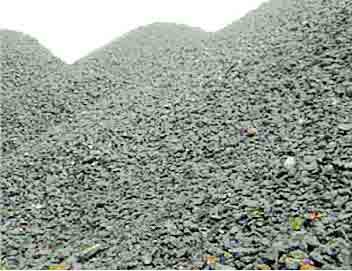
Iron-Ore Lumps is between 6-30 mm in size and is richer in iron content than Fines. Iron-Ore Lumps can be directly fed into the Blast Furnace. The Lumps are preferred over Fines for Steel-Making because its particle size allows oxygen to be freely circulated around the raw materials and melt them efficiently. Lump ore will not liquefy unless it is mixed with, or contains, a high proportion of moisture laden fines. In general, these are IMSBC Code Group ‘C’ cargoes. Note: There are some advantages to using Fines over Lumps, as they can be blended to ensure the desired concentration of iron ore and contaminant materials is entering the blast furnace.
Pellets
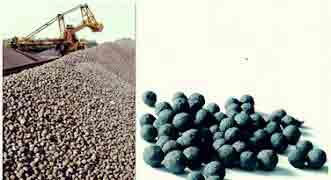
Pellets are made from Palletisation- a process that involves mixing very finely ground particles of iron ore fines of size less than 200 mesh with additives like bentonite and then shaping them into oval/spherical lumps of 8-16 mm in diameter by a pelletizer and hardening the balls by firing with a fuel. It is the process of converting iron ore fines into “Uniformed Sized Iron Ore Pellets” that can be charged directly into a blast furnace or into a furnace used in the production of Direct Reduced Iron (DRI). Iron-Ore Pellets are produced by agglomeration and thermal content with grades ranging from 67% to 72% Fe. Pellet feed is an IMSBC Code Group ‘A’ cargo.
Concentrates
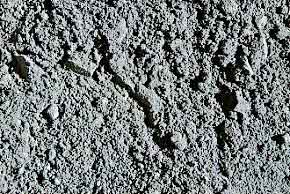
Iron-Ore Concentrate is processed into separate deleterious elements and produces a higher quality product of 63%–69% Fe content. Concentrates have the potential to liquefy if sufficiently moist and therefore requires a Transportable Moisture Level (TML) and Moisture Certificate before loading into the ships and is a part of IMSBC Code Group ‘A’ type of Cargo.